Ever looked at your phone and thought it was playing hard to get? If your device is stuck on “SOS Only,” it’s not just being dramatic. This frustrating situation can leave anyone feeling like they’re stranded on a deserted island, waving their phone in the air like a flag of distress.
Understanding SOS Only Mode
SOS Only Mode indicates that a phone can only make emergency calls. This condition arises when the device loses connection to the cellular network. Several factors contribute to this issue.
Network coverage plays a significant role. Areas with low signal strength or without coverage lead to SOS Only status. Mountains, dense buildings, and remote locations commonly disrupt signal reception.
SIM card issues may also trigger SOS Only Mode. A damaged or improperly inserted SIM card might cause the phone to fail in connecting to the network. Users should inspect their SIM card and, if necessary, reposition or replace it.
Software glitches can manifest in various ways, including incorrect network settings. Restarting the device often resolves minor software problems. If issues persist, performing a software update can help ensure the device functions correctly.
Carrier outages might also lead to unexpected switching to SOS Only. Localized outages mean users cannot connect to the cellular network at that time. Checking with the carrier may provide confirmation of service disruptions.
Low battery levels can impact phone performance. If the battery is critically low, certain functions, including connection to the network, may be limited. Keeping the device charged ensures optimal functionality.
Being aware of these factors empowers users to address the SOS Only issue efficiently. Identifying potential causes enables individuals to troubleshoot effectively and restore normal connectivity quickly.
Common Causes for SOS Only
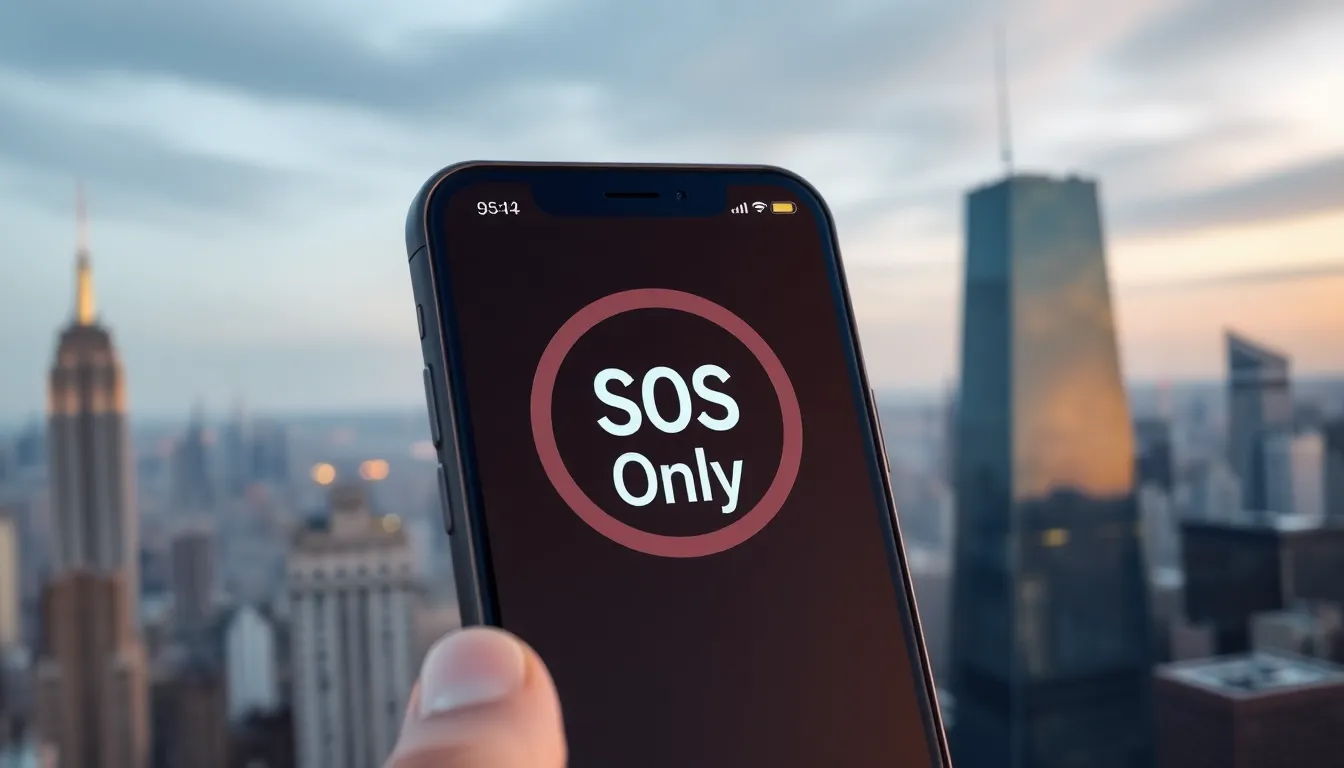
Several factors contribute to a phone displaying SOS Only. Understanding these causes helps users address connectivity issues efficiently.
Network Issues
Network issues frequently lead to SOS Only situations. Poor signal coverage, especially in rural or remote areas, can hinder a device’s connectivity. High-rise buildings or dense neighborhoods may also obstruct signals. Carrier outages impact service availability, causing phones to lose connection entirely. In some cases, users find they temporarily experience SOS Only during adverse weather conditions. Checking network status through carrier websites or apps provides insight into potential outages.
SIM Card Problems
SIM card problems often trigger SOS Only alerts. A damaged, improperly inserted, or outdated SIM card can disrupt communication with the cellular network. Users should ensure the SIM card is correctly seated in its slot. Over time, SIM cards may degrade, leading to connectivity issues; replacing them resolves these problems. It’s crucial to verify that the current SIM card supports the user’s specific carrier. Contacting the carrier for assistance with SIM card issues may also be necessary.
Device Settings
Device settings frequently influence connectivity. Users sometimes unknowingly activate Airplane Mode, halting all network signals. Checking this setting should be a priority. Additionally, network selection settings could inadvertently switch to a preferred, unavailable network. Resetting network settings is another effective method to resolve connectivity issues. Users may also update their device software, as outdated software may impede network access.
How to Troubleshoot SOS Only
Troubleshooting the “SOS Only” issue involves several steps that can restore normal connectivity. Users can start by trying the following methods.
Restart Your Phone
Restarting the phone can resolve minor software glitches. Sometimes, this simple action refreshes the device’s connection to the cellular network. To do this, hold down the power button until the options appear, then select restart or power off. After the device is back on, check if the signal status has changed. This method often fixes temporary issues that lead to SOS Only mode.
Check Network Settings
Examining network settings ensures the device is configured correctly. Access the settings menu to confirm Airplane Mode is off. If Airplane Mode is activated, the phone can’t connect to the cellular network. Users can also select the preferred network manually, ensuring compatibility with the carrier. Resetting network settings may help when problems persist, restoring all connections to default.
Inspect the SIM Card
Inspecting the SIM card can identify physical issues affecting connectivity. Power off the phone before removing the SIM card to avoid damage. Look for any signs of damage or dirt on the card. Once inspected, reseat the SIM card properly in its slot and power the phone back on. This process ensures a secure connection between the device and the network. If problems continue, replacing the SIM card may be necessary.
Preventing SOS Only Mode
Maintaining normal connectivity involves proactive steps. Users can enhance their phone’s performance and avoid SOS Only situations with a few key practices.
Regular Software Updates
Software updates play an essential role in device functionality. Keeping the operating system current ensures the latest bug fixes are installed. Users should regularly check for updates in the settings menu. Ignoring updates can lead to software glitches that cause connectivity issues. Whenever a new update is available, it’s wise to download and install it to improve network reliability. Regular updates also ensure compatibility with carrier settings, which can prevent the SOS Only status.
Network Provider Checks
Contacting the network provider serves as a critical step when facing connectivity problems. Customers can verify if there are ongoing outages or maintenance in their area. Representing the user’s best interests, providers often have information about local issues that impact service quality. In case of a persistent SOS Only mode, checking account status for any restrictions can also provide clarity. Additionally, confirming that the SIM card is active and functional often resolves confusion about service availability. Taking these steps encourages smoother communication and enhances the overall user experience.
Experiencing “SOS Only” mode can be frustrating but understanding the potential causes and solutions can make a significant difference. By taking proactive steps such as checking network settings and ensuring the SIM card is properly seated, users can often restore their connection. Regular software updates and staying informed about carrier status can further prevent this issue from recurring. With the right approach, users can regain reliable access to their network and enjoy uninterrupted communication.